
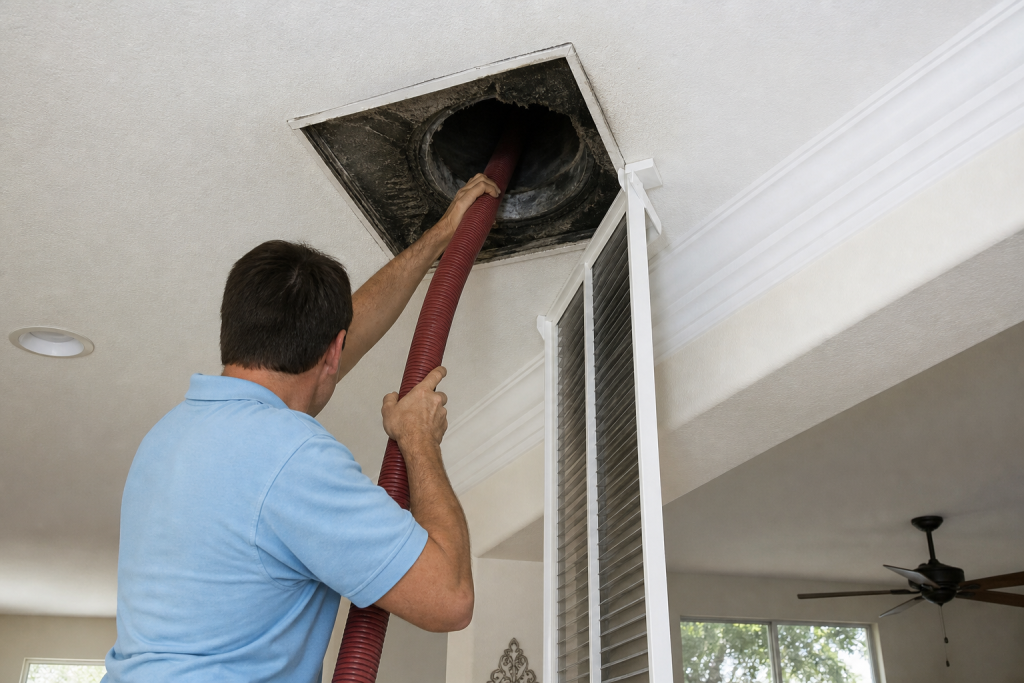
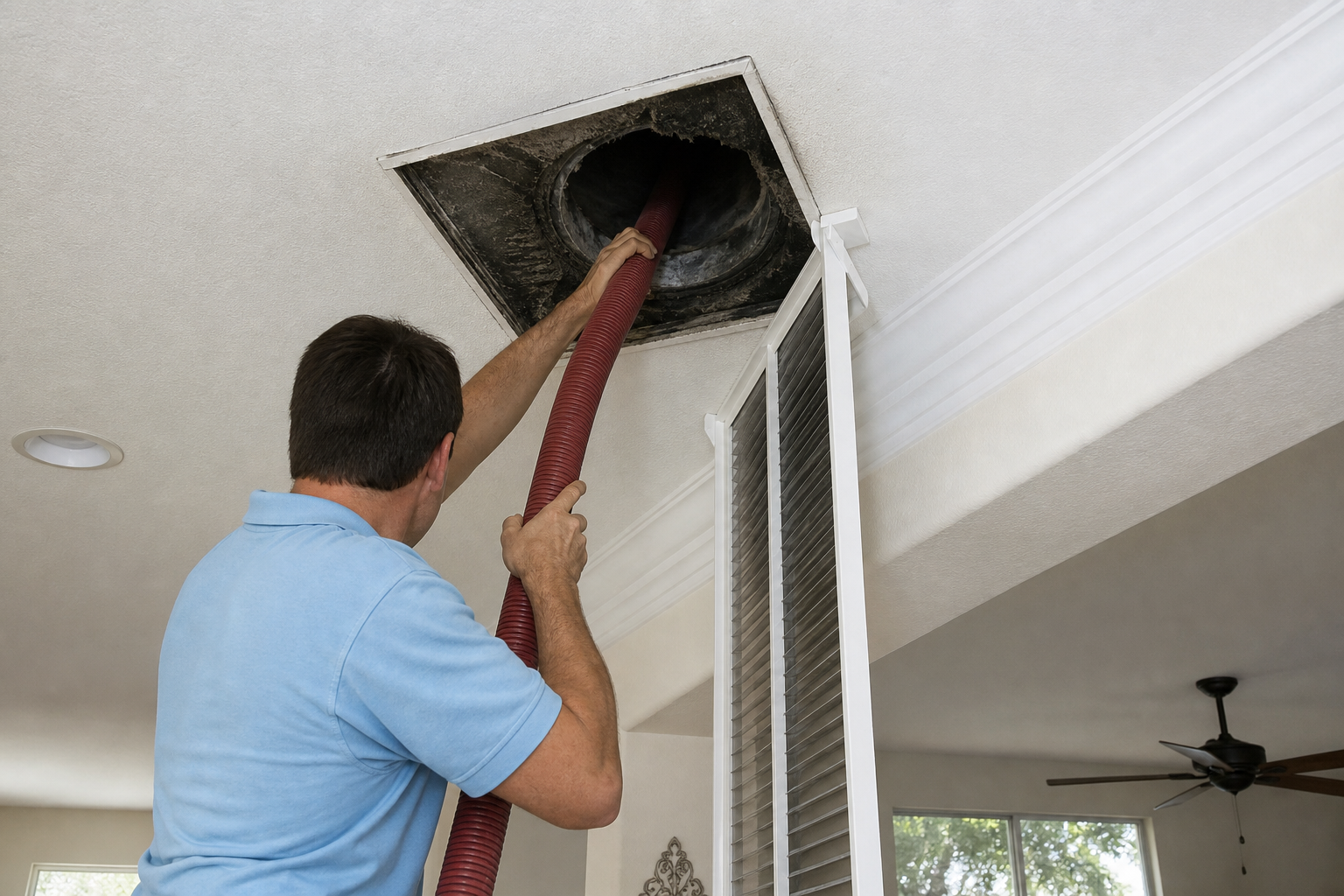
Emergency Air Duct Cleaning Near Me: What Miami Homeowners Should Do First
If you’re searching “emergency air duct cleaning near me” in Miami, the first thing to do is shut off your HVAC system and stop using your ductwork immediately — running air through contaminated ducts after a flood, fire, pest infestation, or sewage event will spread contamination to every room in your home. Document what you see with photos, note any unusual odors or visible debris, then call a specialist who can arrive prepared with the right equipment. If you’d rather not handle the assessment yourself, call Pinnacle Air Duct Cleaning Service Florida at (833) 858-4048 — we offer free estimates and same-day response for genuine emergencies.
Here’s the mistake we see constantly in Miami: a homeowner discovers something wrong — water in a vent, a rodent in a return, smoke smell pumping through every room — and their first instinct is to run the AC to “flush it out.” We’ve arrived at homes in Coral Gables where that single decision turned a contained $400 duct cleaning into a whole-house contamination requiring $4,000 in remediation. The 30 minutes between discovery and professional arrival matters more than most people realize.
What Actually Counts as a Duct Emergency (and What Doesn’t)
Not every urgent duct situation is a true emergency. Knowing the difference saves you money and prevents unnecessary panic.
Four genuine emergencies requiring immediate professional response:
- Flood intrusion: Water entering ductwork from storm surge, roof leaks, or plumbing failures — especially common in Miami’s low-lying neighborhoods like Shorecrest and Little River during summer storms. Mold begins colonizing damp duct insulation within 24–48 hours in our humidity.
- Pest infestation discovery: Live rodents, significant droppings, or nesting material in ducts. Hantavirus and other pathogens become airborne when disturbed.
- Smoke/fire event: Even minor kitchen fires or nearby wildfire smoke can leave acidic soot residue in ductwork that corrodes metal and recirculates with every HVAC cycle.
- Sewage backup near air handler: Any contamination from Category 3 water (sewage) reaching the return side of your system.
Urgent but not emergent: Heavy dust after renovation, mild allergy flare-ups, visible dust at registers, or routine maintenance that’s overdue. These warrant prompt scheduling but won’t escalate dramatically in hours.
In our 17 years, we’ve learned that Miami’s climate turns “urgent” into “emergency” faster than almost anywhere else. That 85% humidity doesn’t give you the buffer time homeowners in drier climates enjoy.
The First 30 Minutes: Step-by-Step by Scenario
What you do before we arrive determines how contained — or how widespread — the damage becomes.
Flood or Water Intrusion
- 1
Shut off the HVAC completely at the breaker, not just the thermostat. Running the system pulls moisture deep into duct runs and saturates insulation.
- 2
Remove standing water near floor registers only if safe — don’t reach into duct openings.
- 3
Photograph water lines inside visible ductwork to show how far contamination reached.
- 4
Open interior doors to encourage passive air circulation, but don’t run fans that connect to ductwork.
Pest Infestation
- Shut off HVAC immediately. Rodent droppings become airborne particulates when disturbed by airflow.
- Don’t seal vents with tape or covers — this traps animals inside and they die in inaccessible runs (we’ve seen this in Miami Springs more than once).
- Note entry points you can see: chewed return screens, gaps where ductwork meets the slab, roof vent damage.
- Leave droppings undisturbed. Dry sweeping releases hazardous particulates.
Smoke or Fire
- HVAC off at the breaker. Running the system embeds soot deeper into duct pores and spreads odor to unaffected rooms.
- Change your HVAC filter if it’s accessible and safe — this prevents recontamination when the system restarts.
- Document which rooms smelled smoke first — this helps trace the contamination path through your duct layout.
Sewage Backup
- HVAC off, period. No exceptions.
- Evacuate the affected area if sewage reached the return air path.
- Note the source and approximate volume. This determines whether we bring Abatement Technologies HEPA containment or standard Rotobrush rotary equipment.
When you call, tell the dispatcher exactly which scenario above matches your situation. “Water in my ducts” gets a different truck prep than “rat droppings in the return.” The 10 seconds it takes to be specific saves us 45 minutes of on-site assessment — and gets your Miami home back to normal faster.
Why Running Your AC Is the Worst First Move
We get it: it’s 92 degrees in July, your house smells like smoke or mildew, and the instinct to “clear the air” is overwhelming. But your HVAC system is a closed-loop distribution network, not an exhaust fan.
Here’s what happens when you run contaminated ducts:
- Flood scenarios: Airflow pushes moisture into dry sections of ductwork, spreading mold spore habitat. In Miami’s humidity, we’ve seen mold establish in previously dry attic runs within 36 hours.
- Pest contamination: Every HVAC cycle aerosolizes urine and droppings, depositing them on furniture, bedding, and kitchen surfaces throughout the home.
- Smoke damage: Soot particles are typically 0.1–1.0 microns — small enough to pass through standard filters and resettle in distant rooms with each cycle.
- Sewage: Bacterial contamination becomes a whole-house biohazard when distributed through supply vents.
Last month we were in a Pinecrest home where the homeowner ran the AC for six hours after a minor bathroom overflow reached a nearby return. By the time they called, every room tested positive for elevated moisture in the ductwork. The original problem was a 10-foot section of wet flex duct. The actual repair required full sanitizing and sealing of a 2,400-square-foot system.
Your thermostat is not a ventilation control. In an emergency, it’s a contamination accelerator.
How to Spot a Real Emergency Provider vs. a Marketing Label
Plenty of Miami companies slap “24/7 emergency” on their website without operational differences from standard service. Here’s how to tell who’s actually prepared:
| What to Ask | Real Emergency Provider | Marketing-Only “Emergency” Service |
|---|---|---|
| “What equipment do you bring for water-contaminated ducts?” | Specific tools: HEPA vacuums (Nikro), rotary brush systems (Rotobrush), moisture meters, antimicrobial applicators | Vague assurances or “we’ll assess when we get there” |
| “Can you contain the affected zone before cleaning?” | Describes negative air machines, zone isolation, or temporary sealing protocols | No containment plan — starts cleaning immediately, spreading contamination |
| “What’s your typical response time in [your Miami neighborhood]?” | Specific window: “90 minutes to Kendall, 2 hours to Homestead” | “We’ll get there as soon as possible” |
| “Will the same technician handle assessment and cleaning?” | Yes — owner-operator or dedicated specialist | Dispatches whoever’s available; assessment and cleaning may be different crews |
At Pinnacle, Charles leads every job himself. When you describe your situation to our dispatcher, Charles hears it directly and loads the truck accordingly — whether that’s Rotobrush rotary brushes for heavy debris, Nikro HEPA containment for mold, or sanitizing equipment for pest or sewage contamination. No wasted trips, no “we’ll need to come back with different tools.”
What to Document Before the Technician Arrives
The photos and notes you gather in those first 30 minutes become our roadmap. Here’s what actually helps:
- Wide shots of the affected area showing the full context — not just close-ups of the problem
- Visible water lines or residue marks inside duct openings (use your phone’s flashlight)
- Your HVAC filter condition — remove and photograph if safe; this tells us contamination load
- Recent maintenance history — when ducts were last cleaned, any prior water events, age of system
- Symptoms timeline: “Smell started Tuesday after the storm” or “Allergies spiked three days after we heard scratching”
In Miami’s older homes — particularly in neighborhoods like Allapattah and Liberty City with original 1950s–60s ductwork — knowing whether you have galvanized steel, asbestos-wrapped, or modern flex duct changes our approach entirely. If you know your home’s construction era, mention it.
Related Services in Miami
Depending on your emergency type, you may need more than duct cleaning alone. Pinnacle’s full scope covers the complete indoor air quality system: Air Duct Cleaning in Williamsburg, Dryer Vent Cleaning in Williamsburg, and HVAC Cleaning in Williamsburg. From cleaning to sealing to sanitizing, we handle it without coordinating multiple contractors.
What happens when you call
- 1
A real person answersNo phone trees — you reach a local pro.
- 2
You get an upfront price rangeHonest numbers before anyone is dispatched.
- 3
A background-checked tech heads outLicensed & insured, dispatched right away.
- 4
You approve before work beginsNothing starts until you say go.
The Bottom Line
The most important action in any duct emergency happens before a technician arrives: shut off your HVAC, don’t try to “air out” the problem, and document what you see. Those three steps contain the damage, protect your health, and ensure the professional who responds can work efficiently rather than spending their first hour undoing well-intentioned mistakes.
In Miami’s heat and humidity, time works against you faster than in most climates. Mold establishes, odors set, and contamination spreads with every minute of airflow. The good news: with the right immediate response and a specialist who arrives prepared, most genuine duct emergencies resolve in a single day of targeted work.
If you’re in Miami and facing a duct emergency — or you’re not sure whether your situation qualifies — call Pinnacle Air Duct Cleaning Service Florida at (833) 858-4048. We’ll walk you through those first 30 minutes over the phone, and Charles will arrive with the right equipment to assess and resolve it. Estimates are free, and we prioritize same-day response for genuine emergencies.
Frequently Asked Questions
Emergency duct cleaning in Miami typically ranges from $350 for contained, single-zone contamination to $1,200+ for whole-system remediation after flood or sewage events. The exact cost depends on duct material, contamination type, accessibility, and whether repairs or sealing are needed. Call (833) 858-4048 for a free, specific estimate — we don’t charge emergency premiums for after-hours calls.
Yes — for genuine emergencies (flood, pest, fire, sewage), we offer same-day response throughout Miami, typically within 90 minutes to 2 hours depending on your neighborhood. We maintain this capacity because Charles leads every job personally and keeps our full equipment range loaded and ready. Call (833) 858-4048 and we’ll give you a specific arrival window.
With the HVAC shut off, short-term occupancy is usually safe for most contamination types. However, evacuate immediately if you smell raw sewage, see visible mold covering large duct surfaces, or experience respiratory symptoms like wheezing or burning eyes. When in doubt, step outside and call us — we’ll assess remotely and advise. Call (833) 858-4048 for guidance specific to your situation.
Many Miami homeowners’ policies cover duct cleaning when it’s part of a covered peril — typically water damage from burst pipes, storm intrusion, or fire/smoke events. They generally don’t cover maintenance-related cleaning or pest infestations unless a covered peril caused the entry point. Document everything with photos before any cleanup begins, and we can provide detailed scope documentation for your adjuster. Call (833) 858-4048 and we’ll help you understand what documentation you’ll need.
Written by Charles Rodriguez, Owner & Lead Technician at Pinnacle Air Duct Cleaning Service Florida, serving Miami since 2009.
Need Air Duct Cleaning Help?
Call Pinnacle Air Duct Cleaning Service Florida — licensed & insured, here with fast after-hours help in Florida.
(833) 858-4048