
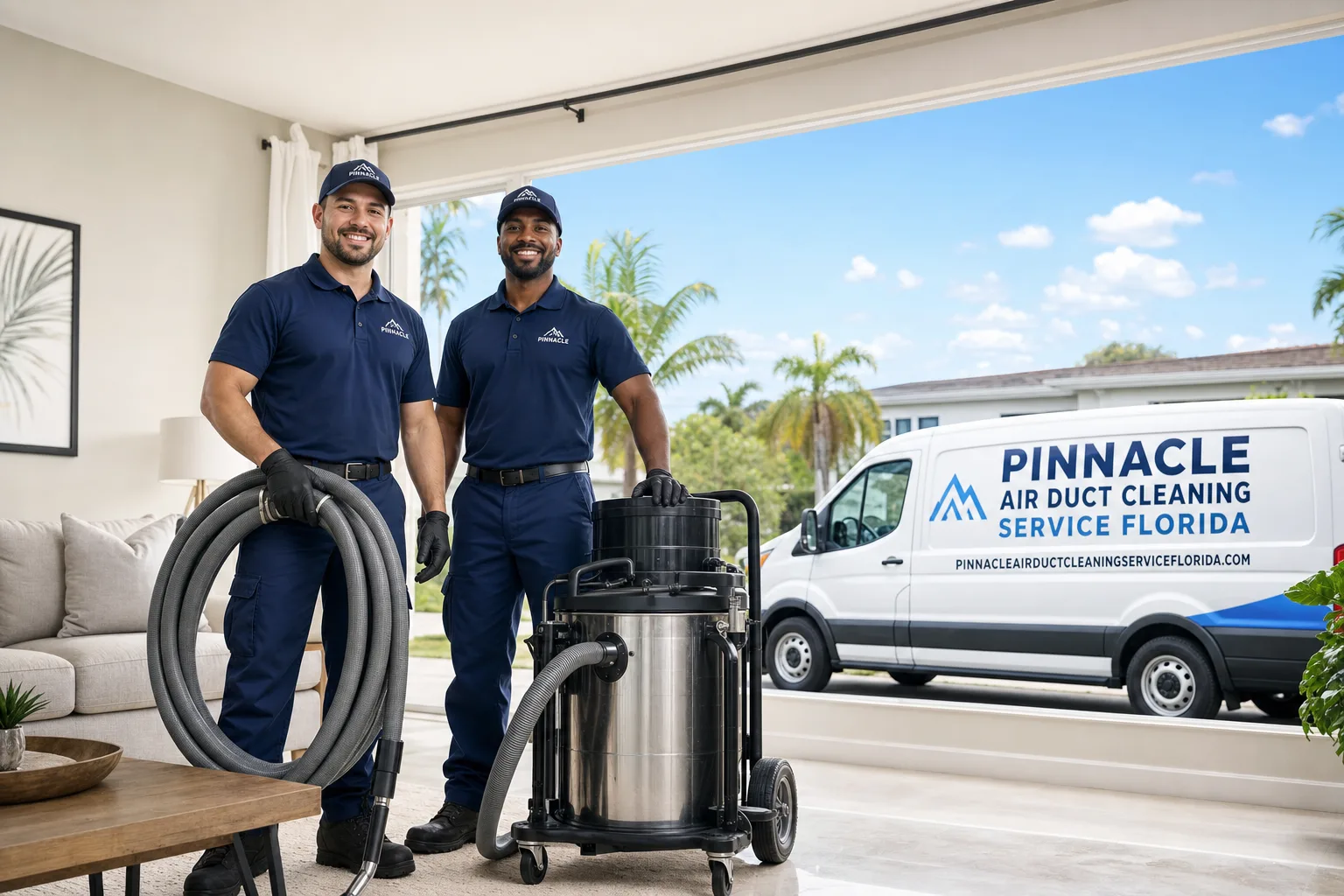

Fast, Reliable HVAC Cleaning Across Miami Lakes
HVAC cleaning in Miami Lakes typically costs $280–$650 for a full system service, with most jobs completed same-day by our HVAC Cleaning team. We’re usually on-site within 45 minutes to the 33014 zip code and surrounding neighborhoods like Lake Arbor, Royal Oaks, and Miami Lakes East. After 17 years working South Florida duct systems, we’ve learned that Miami Lakes homes present a specific challenge: those original 1960s–1980s fiberglass duct board systems weren’t built for decades of year-round humidity, and standard cleaning without proper mold documentation can make air quality worse, not better. Call (833) 858-4048 for a free estimate—we’ll inspect your system and give you an honest assessment of what you’re actually breathing.
Why Pinnacle Air Duct Cleaning Service Florida Is Miami Lakes’s Preferred HVAC Cleaning Company
Charles Rodriguez leads every job himself. That’s not a tagline—it’s how we’ve built a 4.9-star average across 1,186 verified reviews. In Miami Lakes, where the housing stock is remarkably uniform and the duct problems are equally predictable, that owner-on-the-job accountability means something. We’ve cleaned HVAC systems on Royal Palm Boulevard, in the townhomes near Main Street, and throughout the Lake Arbor enclave. We know which attic configurations trap condensation and which 1970s builds show the same mold signature at the air-handler connection.
Our response time to Miami Lakes averages under 45 minutes during business hours. We’re coming from our Miami base, but we know the local grid—NW 154th Street to Miami Lakeway North—so we don’t waste time navigating. More importantly, we don’t waste your time with generic recommendations. When you’ve seen as many Miami Lakes attics as we have, you know before you open the access panel what you’re likely to find.
Our HVAC Cleaning Services in Miami Lakes
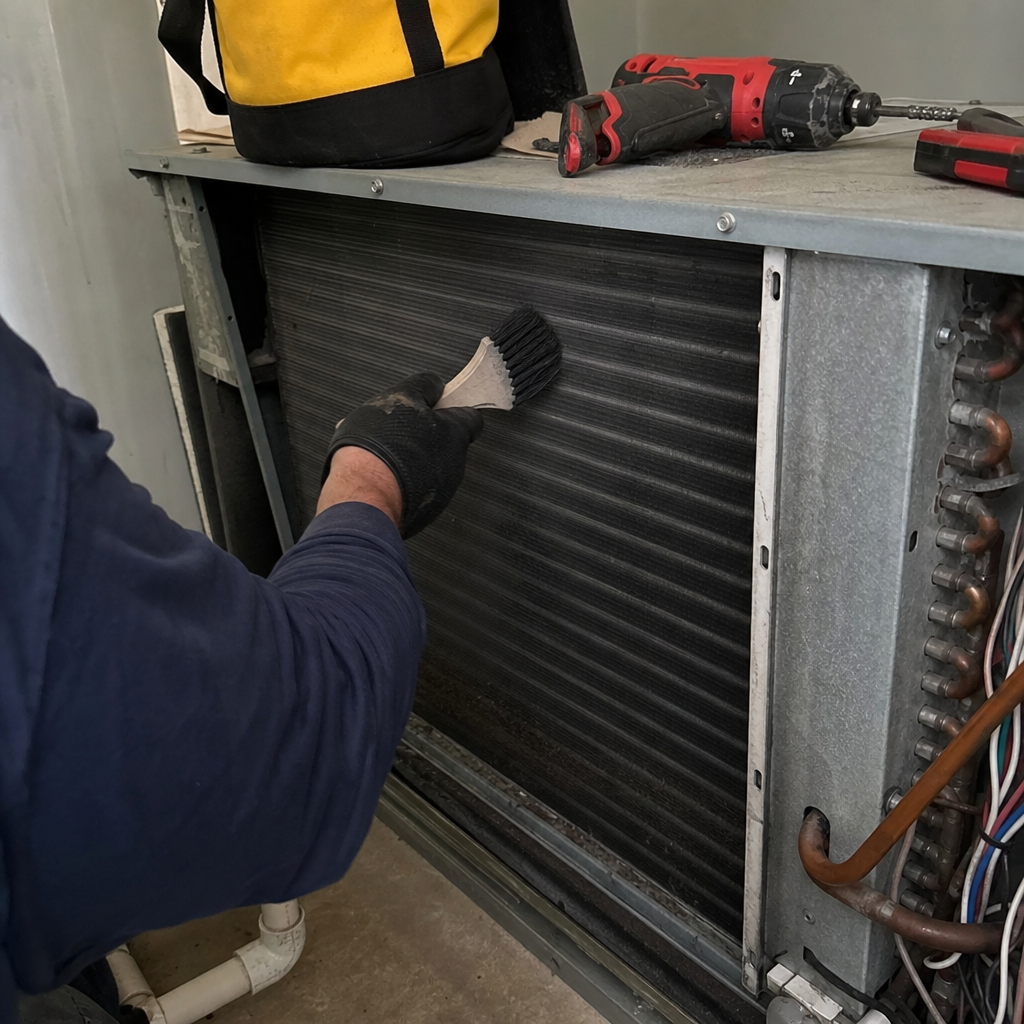
Evaporator Coil Cleaning
The evaporator coil in your Miami Lakes home works harder than coils almost anywhere else in the country. With ambient humidity regularly pushing past 85% and your system running 10–12 months a year, that coil stays wet. Microbial growth isn’t a possibility—it’s an inevitability. We use professional-grade foaming agents and low-pressure rinsing to restore heat transfer efficiency without damaging delicate fins. In Miami Lakes’s older systems, we often find coils that have never been cleaned, reducing airflow by 30% or more and forcing your compressor to run longer cycles. A clean coil means lower energy bills and less strain on equipment that was never designed for this workload.
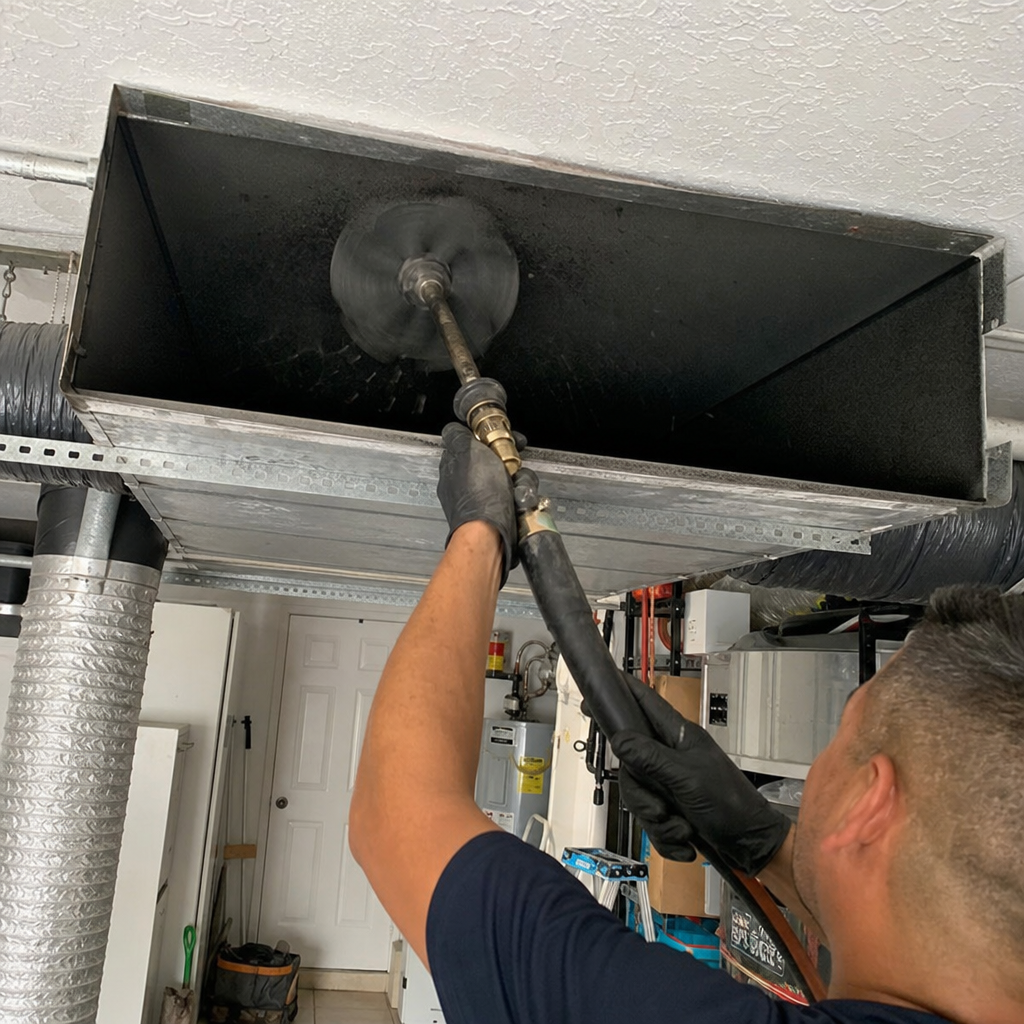
Blower Cleaning
Your blower motor and wheel collect everything the return ducts pull in: skin cells, pollen, construction dust from that 1987 renovation, and the fine particulate that blows in from the Everglades during dry season. In Miami Lakes homes with original duct board, we’ve seen blower wheels so caked with debris that they throw the entire assembly out of balance. That vibration damages bearings and creates noise you shouldn’t have to live with. We remove the blower assembly, clean the wheel and housing with HEPA-contained methods, and reassemble with proper torque specs. Charles handles this personally—it’s not delegated to a trainee with a shop vac.
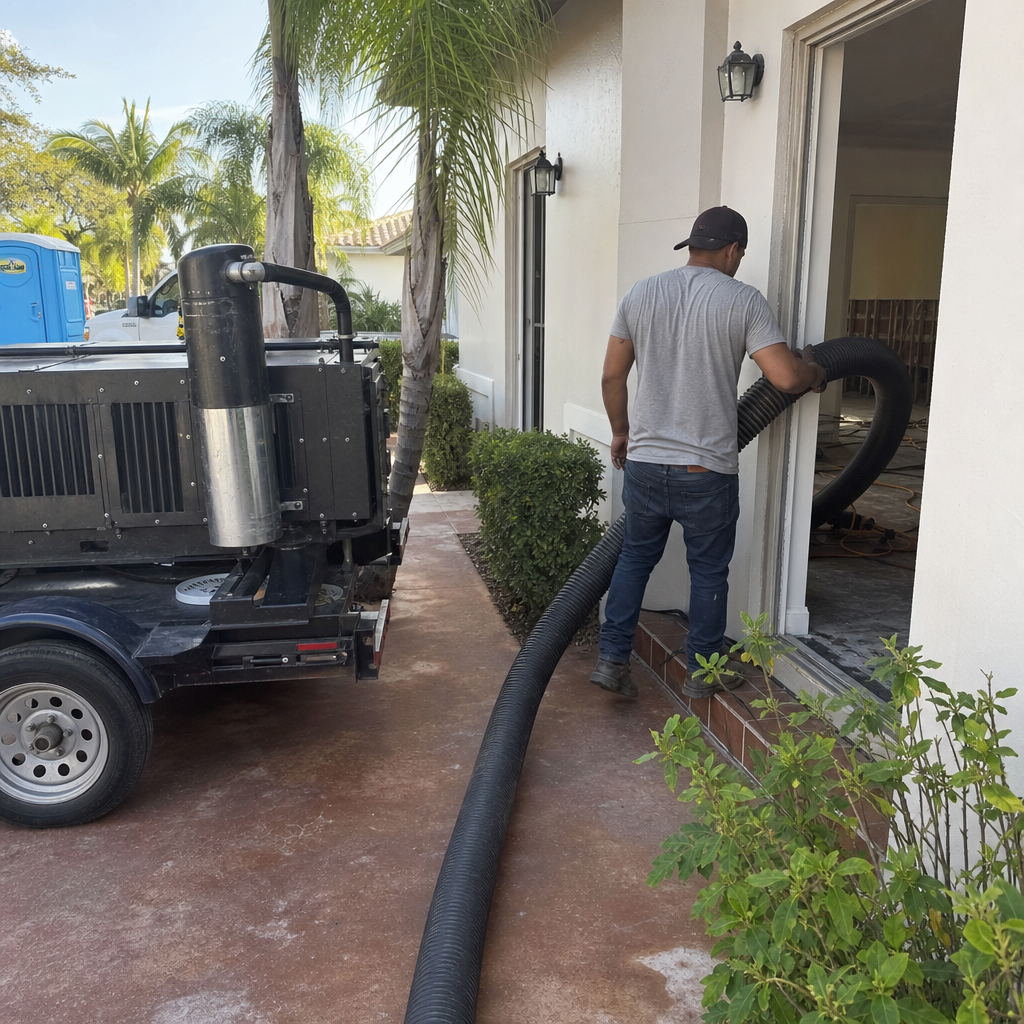
Condenser Cleaning
Your outdoor condenser unit sits in Miami Lakes’s subtropical heat, often in full sun with minimal shade from those low-slope ranch rooflines. Cottonwood fluff, grass clippings, and the fine limestone dust from South Florida soil clog coils and reduce heat rejection. We disassemble the protective grilles, apply foaming cleaner, and rinse with controlled water pressure—never the high-pressure wand that bends fins into permanent damage. For Miami Lakes homes near the undeveloped western edge, closer to the Everglades, we see heavier organic loading that requires more frequent service intervals.
Air Handler Cleaning
The air handler is where your Miami Lakes home’s air quality battle is won or lost. In the 1960s–1980s builds that dominate this community, air handlers were often retrofitted into closets or garage spaces never intended for HVAC equipment. Condensate pans rust. Cabinet interiors grow mold. We clean and treat the entire cabinet interior, inspect drain lines for the algae blooms that thrive in our climate, and verify that secondary drain pans and float switches are functional. This is where our field experience in Miami Lakes pays off: we know which original installations lack proper return air pathways and which ones have been modified by three previous homeowners.
Coil Treatment
After cleaning, we apply EPA-registered coil treatments that inhibit microbial regrowth without leaving residues that affect air quality. In Miami Lakes’s humidity, this step isn’t optional—it’s what keeps your system clean for more than a few weeks. We use Guardsman-approved antimicrobial treatments applied according to manufacturer specifications, not the over-the-counter sprays that some services use as a finishing touch. The treatment bonds to metal surfaces and provides residual protection through the peak cooling season.
What happens when you call
- 1
A real person answersNo phone trees — you reach a local pro.
- 2
You get an upfront price rangeHonest numbers before anyone is dispatched.
- 3
A background-checked tech heads outLicensed & insured, dispatched right away.
- 4
You approve before work beginsNothing starts until you say go.
Trusted Brands We Service in Miami Lakes
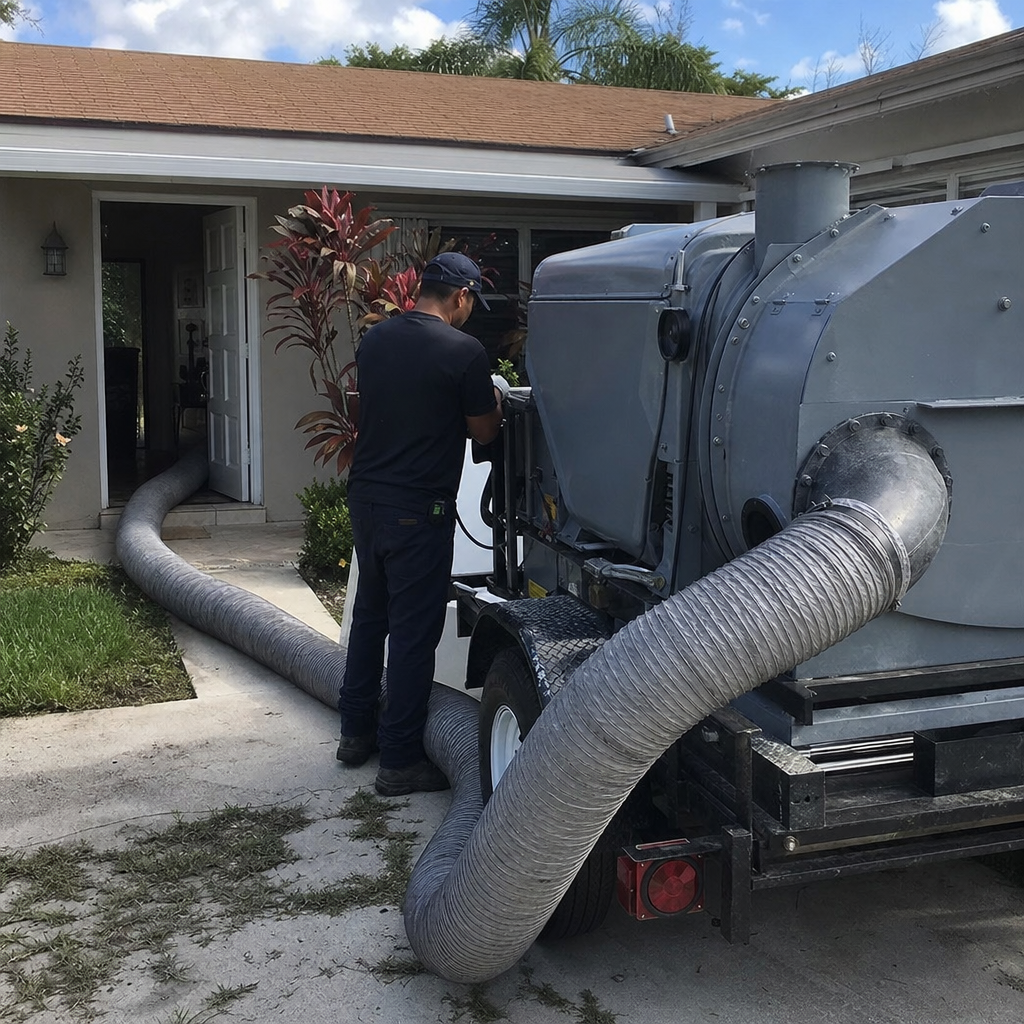
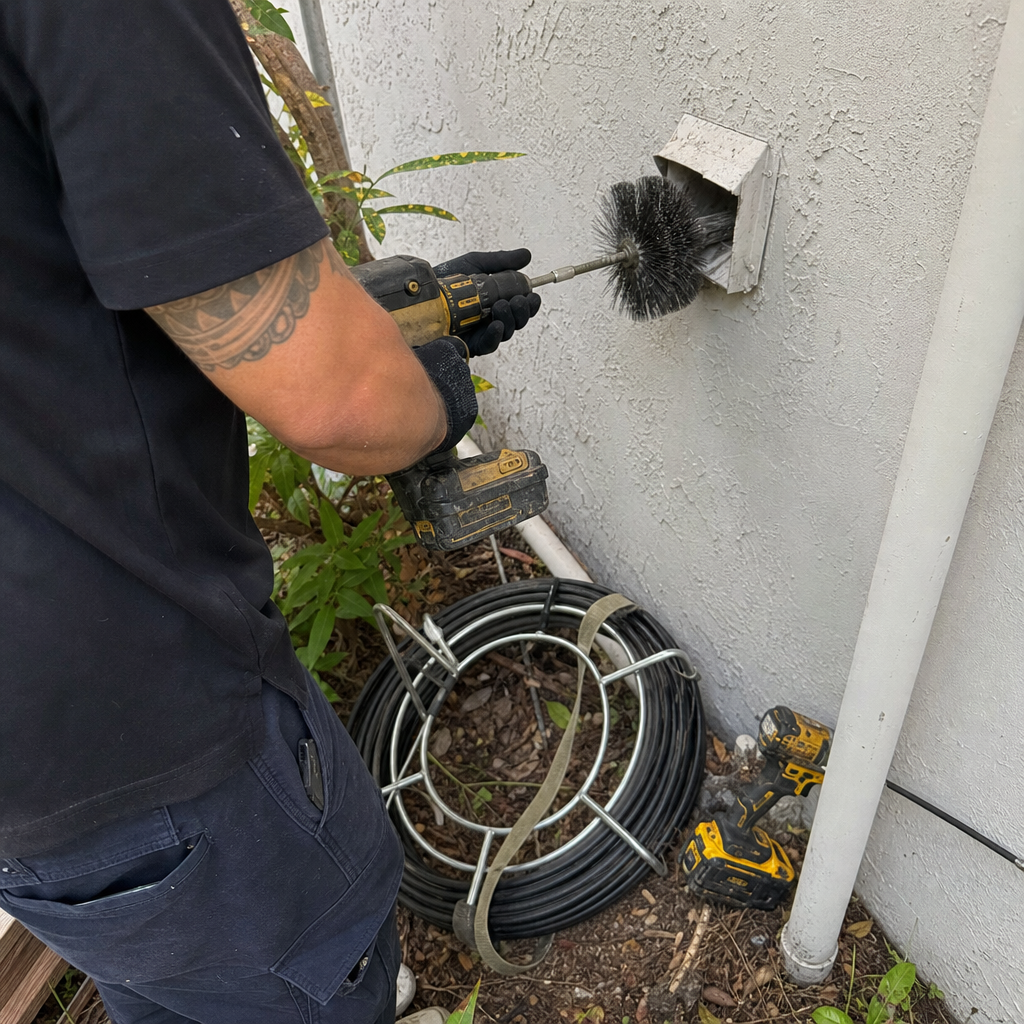
We maintain and clean systems from every major manufacturer installed in Miami Lakes homes over the past four decades: Carrier, Trane, Lennox, Rheem, Goodman, and the aging Bryant and York units common in 1970s builds. Our equipment—Rotobrush rotary brush systems for mechanical agitation, Nikro HEPA vacuum systems for contained debris removal, and Honeywell air quality monitors for post-service verification—is the same grade used by restoration professionals, not the rental-grade tools sold to franchise operators. We stock common replacement parts for Miami Lakes’s most prevalent systems, which means when we find a failed component during cleaning, we can often address it same-day rather than ordering and rescheduling.

Common HVAC Cleaning Problems We See in Miami Lakes Homes
- Attic duct runs trap heat and humidity. Miami Lakes’s slab-on-grade ranches push ductwork through unconditioned attics where temperatures exceed 140°F in summer. That heat drives moisture into fiberglass duct board, accelerating dust accumulation and creating conditions where microbial growth returns within weeks of inadequate cleaning.
- Original fiberglass duct board liner collapses or degrades. The material was state-of-the-art for 1972. Fifty years later, it sheds fibers and loses structural integrity. We handle these systems with specific techniques to avoid releasing fiberglass into your air stream during cleaning—something generalist cleaners often don’t account for.
- Poorly sealed attic penetrations allow persistent moisture infiltration. Every plenum box and duct connection that wasn’t properly sealed during original installation has been breathing humid Miami Lakes air for decades. We document these conditions and can recommend sealing solutions that prevent the mold recurrence we’ve all seen too many times.
- Retrofitted systems create convoluted airflow paths. Homes not originally designed for central air often have duct runs with excessive bends, sharp transitions, and insufficient return capacity. Cleaning reveals these design compromises; our 17 years of focused experience means we can identify when duct modification—not just cleaning—is the real solution.
Pricing for HVAC Cleaning in Miami Lakes, FL
Here’s what HVAC cleaning costs in Miami Lakes’s market:
| Service | Typical Range |
|---|---|
| Evaporator coil cleaning | $180–$320 |
| Blower cleaning | $150–$260 |
| Condenser cleaning | $120–$200 |
| Air handler cleaning | $200–$350 |
| Full HVAC system cleaning (all components) | $480–$720 |
| Coil treatment (add-on) | $75–$125 |
| Mold documentation and antimicrobial treatment | $150–$280 |
What moves you within these ranges? System accessibility matters—air handlers buried in finished closets cost more to access properly. The degree of contamination affects labor time; a blower wheel with five years of buildup takes longer than annual maintenance. And Miami Lakes’s specific conditions—those humid attics, that degrading duct board—sometimes reveal issues that need addressing before cleaning proceeds safely. We quote upfront after inspection, not after we’ve started the job. Estimates are free. Call (833) 858-4048.
We Also Serve Cities Near Miami Lakes
Our service radius covers Hialeah to the south, Hialeah Gardens to the southwest, Country Club to the west, and Palm Springs North to the northwest. Each community has its own housing character—Hialeah’s denser mid-century apartments, Country Club’s later buildouts—but Miami Lakes remains our most concentrated zone of legacy duct board systems requiring specialist attention. If you’re in one of these neighboring cities and suspect similar issues, we’re happy to assess your system.
Serving Miami Lakes, FL — Our Local Coverage Area
We’re based in the Miami Lakes area and know this community well. Use the map below to see our service coverage — if you’re nearby, we can almost certainly help.
FAQs — HVAC Cleaning in Miami Lakes
Your Miami Lakes home likely has original fiberglass duct board from the 1960s–1980s that absorbs humidity and harbors mold, plus an HVAC system that runs 10–12 months a year in 85%+ relative humidity. Newer neighborhoods have modern flex duct and better-sealed building envelopes. We recommend annual HVAC cleaning for Miami Lakes homes versus the 2–3 year interval adequate for newer construction. Call (833) 858-4048 to schedule—estimates are free.
We treat it as a documented remediation step, not a quick wipe-down. Our protocol includes HEPA-contained removal, photographic documentation for your records, antimicrobial treatment with Guardsman-approved products, and verification that the moisture source—typically poorly sealed attic penetrations—is identified. On a recent job in the Lake Arbor neighborhood, we found the first 18 inches of supply plenum at the air-handler connection coated in black mold—a signature of Miami Lakes’ 1970s fiberglass duct board absorbing moisture through poorly sealed attic penetrations. We performed a full HVAC cleaning including evaporator coil and blower cleaning, then documented the mold colonies before treatment to prevent spore redistribution. Call (833) 858-4048 for an assessment.
Retrofit makes sense when duct board liner is actively collapsing or when mold recurrence exceeds twice yearly despite proper cleaning. Full duct replacement in a Miami Lakes ranch typically runs $3,500–$6,500 versus $480–$720 for comprehensive cleaning. We give honest guidance on which path serves you longer-term—sometimes cleaning and sealing extends serviceable life 3–5 years; sometimes replacement is the only sound option. Charles Rodriguez evaluates this personally on every job. Call (833) 858-4048 for an in-home assessment.
We clean with Rotobrush rotary brush systems for mechanical agitation inside ducts, Nikro HEPA vacuum systems for debris containment, and apply Guardsman-approved antimicrobial treatments. For verification, we use Honeywell air quality monitors to measure particulate reduction post-service. This is professional-grade equipment, not rental or consumer-grade tools. Call (833) 858-4048 to ask Charles about our specific protocols for your system type.
Miami Lakes’s position just east of the Everglades means ambient humidity regularly exceeds 85%, and that moisture loads into your attic and duct system continuously. Even perfectly cleaned ducts will re-contaminate faster if underlying moisture issues aren’t addressed. Our cleaning protocol includes identifying and documenting these pathways; we don’t pretend a cleaning alone solves a humidity problem. Call (833) 858-4048 and we’ll show you exactly what we’re seeing in your specific system.
Written by Charles Rodriguez, Owner at Pinnacle Air Duct Cleaning Service Florida, serving Miami and Miami Lakes since 2007.